1. Behind Drywall
That little brown spot on the wall may not be the whole problem.
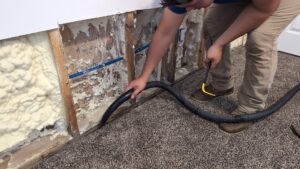
Water can move behind drywall and soak insulation or framing before the surface shows obvious damage. By the time you notice bubbling paint, discoloration, or a soft spot, moisture may already be spread farther than you think.
2. Under Flooring
Carpet, laminate, vinyl, and even tile can hide moisture underneath.
The surface may feel dry while the pad, subfloor, or materials below are still holding water. That trapped moisture can lead to odors, warping, and bigger restoration issues if it is not found and dried properly.
3. Around Windows and Doors
Monsoon rain does not always fall straight down.
Wind-driven rain can push water into small gaps around windows and doors, especially if seals, flashing, or caulking have started to fail.
If you notice damp drywall, peeling paint, or swelling around a window or door frame after a storm, it is worth taking a closer look.
4. In the Ceiling and Attic
Roof leaks can be sneaky.
Water may enter through one spot in the roof and travel along rafters or other materials before finally appearing somewhere else in the ceiling.
That means the stain you see inside the house may not be directly below the actual leak.
Attics can also hold moisture in insulation, wood, and other materials long after the storm has passed.
5. Along Exterior Walls and Low Areas
Heavy rain can expose drainage problems around a home quickly.
If water pools near the foundation, runs toward the house, or collects against an exterior wall, it can eventually find a way inside.
Garages, lower rooms, wall edges, and areas near exterior doors are common places to watch after a big monsoon storm.
The Biggest Mistake Is Assuming It Will Dry on Its Own
Sometimes it will.
Sometimes it will not.
The problem is that it is difficult to know what is happening inside walls, under flooring, or in other hidden areas just by looking at the surface.
That is where proper moisture detection and professional drying can make a big difference.
The goal is not just to clean up what you can see. It is to make sure moisture is not left behind where it can cause more damage later.
What to Do After a Heavy Storm
If you notice water inside your home after a monsoon storm, deal with the source if it is safe to do so and start addressing the damage as quickly as possible.
The sooner hidden moisture is identified, the better chance you have of limiting additional damage.
Legacy Restoration helps homeowners throughout the Gila Valley with water damage, mold concerns, and property restoration when the unexpected happens.
Because monsoon season is exciting enough without finding out your house decided to bring the rain indoors.
Learn more at LegacyRestorationAZ.com.