Can This Be Saved? What Happens to Flooring, Drywall & Cabinets After Water Damage

Can This Be Saved? What Happens to Flooring, Drywall & Cabinets After Water Damage
When water gets into your home, one of the first thoughts is usually:
“Are we going to have to tear all of this out?”
It’s a fair question.
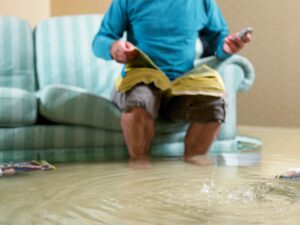
You see wet flooring, water along the baseboards or moisture underneath the kitchen cabinets, and it’s easy to assume everything the water touched is ruined.
But water damage restoration isn’t always about ripping everything out and starting over.
Sometimes materials can be dried and saved. Sometimes they can’t. And a big part of professional restoration is figuring out the difference.
Here’s what can happen to some of the most common materials in your home after water damage.
First: Where Did the Water Come From?
Before deciding whether something can be saved, one of the biggest questions is what kind of water got it wet.
A clean-water leak from a supply line is very different from water involving sewage or other contaminants.
How long the water has been sitting matters, too.
Materials that are addressed quickly may have a much better chance of being dried successfully than materials that have remained wet for an extended period.
That’s why the first step isn’t simply looking at something and deciding whether it appears dry.
Restoration professionals need to determine where the water traveled, what materials were affected and how much moisture is still present.
What Happens to Drywall?
Drywall can make water damage tricky because the part you see isn’t necessarily the only part that’s wet.
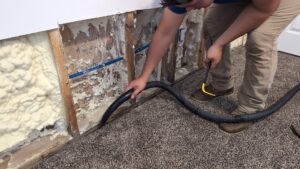
Water can wick upward through drywall from the floor. It can also travel behind walls from plumbing leaks, roof leaks or other sources.
So does wet drywall automatically have to come out?
Not necessarily.
If the water source is appropriate for drying, the drywall hasn’t been wet too long and the material hasn’t lost its structural integrity, there may be situations where it can be dried.
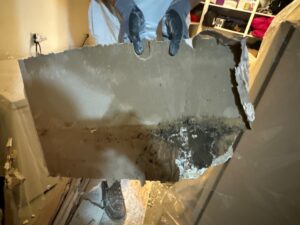
But drywall that is sagging, crumbling, heavily saturated or contaminated may need to be removed.
Insulation behind the wall can also complicate things.
This is why simply touching the wall and saying, “Feels dry to me,” doesn’t always tell the whole story.
Can Wet Carpet Be Saved?
Sometimes.
The carpet itself may be salvageable depending on the source of the water, how long it has been wet and its condition.
The bigger question may be what’s underneath it.
Carpet pad can hold a surprising amount of moisture. Water may also reach the subfloor below.
So even when the top of the carpet begins feeling dry, moisture can remain underneath.
In some situations, carpet may be lifted so the affected area can be properly evaluated and dried. In others, portions of the carpet or pad may need to be removed.
And if contaminated water is involved, the approach can change significantly.
The important part is making sure all affected layers are addressed, not just drying the surface you can see.
What About Hardwood or Laminate Flooring?
This is where timing can make a big difference.
Wood and wood-based flooring materials can absorb moisture. When they do, homeowners may notice changes like cupping, buckling, swelling or separation.
But seeing wet hardwood doesn’t automatically mean it’s destined for the dumpster.
Depending on the flooring, severity of the damage and how quickly drying begins, specialized drying methods may sometimes be used to remove moisture from the flooring and the materials underneath it.
Other products can be less forgiving.
Laminate and some engineered materials can swell or separate after absorbing water, and that damage may not reverse when the material dries.
The exact flooring product matters.
That’s why the answer to “Can you save my floor?” often isn’t available until someone has evaluated the actual damage.
Can Kitchen and Bathroom Cabinets Be Saved?
Cabinets are another interesting one because they’re made from several different materials.
Solid wood may respond differently to water than particleboard or MDF.
Water can also travel underneath cabinets or become trapped between the cabinet and the wall.
A cabinet might look perfectly normal from the front while moisture is sitting somewhere you can’t see.
Restoration professionals may look at the cabinet material, where the water traveled, how saturated it became and whether the cabinet has started swelling, separating or deteriorating.
Sometimes cabinets can remain in place while the surrounding area is dried.
Sometimes portions need to be removed to access trapped moisture.
And sometimes water has damaged the cabinet material enough that replacement makes more sense.
Again, there’s no universal answer.
Baseboards Can Tell a Story
If you’ve ever had water damage, you may have noticed baseboards being removed early in the process.
There’s a reason for that.
Water can travel behind them and into the bottom of the drywall.
Removing affected baseboards can help provide access to areas that need to be inspected or dried.
And because baseboards can swell, warp or separate after getting wet, their condition can also provide clues about how far the water traveled.
That little piece of trim along the floor can reveal quite a bit about what’s happening behind the surface.
What You See Isn’t Always the Whole Problem
This is probably the biggest takeaway.
Imagine a washing machine supply line leaks.
You walk into the laundry room and see a puddle extending a few feet across the floor.
You clean up the visible water.
Problem solved?
Maybe not.
Water may have traveled underneath the flooring, underneath the baseboards, into the bottom of the drywall or into an adjoining room.
That’s why restoration professionals use moisture-detection equipment rather than relying only on what they can see.
The goal is to find the edge of the water damage — not just the edge of the puddle.
Why Drying Something Properly Matters
There’s an important difference between something feeling dry and actually returning to an appropriate moisture level.
Fans from the garage may help move air across the surface, but that doesn’t necessarily address moisture trapped underneath flooring or inside building materials.
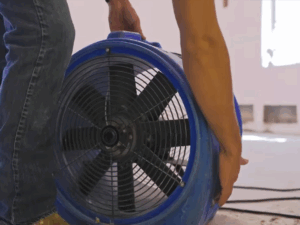
Professional water mitigation can involve equipment designed to remove moisture from the air and affected materials while technicians monitor how those materials are drying.
The process isn’t just:
Set up equipment → wait a few days → pick it up.
The affected materials should be monitored so the drying process can be adjusted as conditions change.
Sometimes Removing Material Is Actually the Better Option
Nobody wants to hear that part of their home needs to be removed.
But saving everything isn’t always the goal.
Saving what can be safely and effectively saved is.
If a material is contaminated, structurally damaged, deteriorating or preventing access to moisture trapped somewhere else, removal may be necessary.
And in those situations, trying to preserve the material simply because it looks okay from the outside can create a bigger headache later.
A good restoration process isn’t about tearing out as much as possible.
It also isn’t about saving as much as possible at any cost.
It’s about making the right decision for each affected material.
The Earlier You Find It, the More Options You May Have
This is why quick action after water damage matters.
If you find water in your home, stop the source if you can safely do so and get the affected area evaluated.
Don’t assume everything is ruined.
But don’t assume everything will simply dry on its own, either.
Flooring, drywall, cabinets and other materials all respond to water differently, and what can be saved depends on the situation.
At Legacy Restoration, our job is to figure out where the water went, what has been affected and the right way to move forward.
Because when water gets into your home, the question isn’t simply:
“What got wet?”
It’s:
“What can we save — and what needs to happen to make your home right again?”
If you’re dealing with water damage in Thatcher, Safford or anywhere in the Gila Valley, call Legacy Restoration at (928) 224-9115.