Why Water Damage Often Shows Up Weeks After a Storm
Why Water Damage Often Shows Up Weeks After a Storm
After a major storm passes, many homeowners assume that if everything looks fine inside their home, there’s nothing to worry about. But in reality, water damage often doesn’t appear immediately. In many cases, it can take days or even weeks before the signs of a problem start to show.
Understanding why this happens can help homeowners catch damage early and prevent much more serious issues like structural damage or mold growth.
Storm Damage Isn’t Always Immediate
When a storm hits, rain, wind, and debris can create small vulnerabilities in a home’s exterior. Roof shingles may lift slightly, flashing can loosen, and tiny cracks can develop around windows or vents. These issues may not cause visible leaks right away.
Instead, water can slowly enter your home over time. It may seep into attics, insulation, drywall, or framing, gradually spreading before becoming noticeable.
Because this process happens slowly, homeowners often don’t connect the damage they see weeks later to the storm that caused it.
Water Can Travel Through Hidden Areas
Water rarely stays in the place where it enters a home. Once inside, it can move through building materials and gravity can carry it to completely different areas.
For example:
A roof leak may show up as a ceiling stain in another room.
Water entering through a window frame may travel inside the wall and appear near baseboards.
Moisture in the attic can soak insulation before reaching drywall below.
This movement makes it difficult to detect the problem until the damage becomes more visible.
Materials Take Time to Show Damage
Many materials in your home absorb water slowly. Drywall, wood framing, and insulation can hold moisture for days before any visible signs appear.
By the time homeowners notice:
Yellow or brown ceiling stains
Peeling paint
Warped flooring
Musty odors
the water may have been present for quite some time.
The longer moisture remains trapped inside walls or ceilings, the greater the chance of mold growth and structural deterioration.
Mold Can Begin Growing Within Days
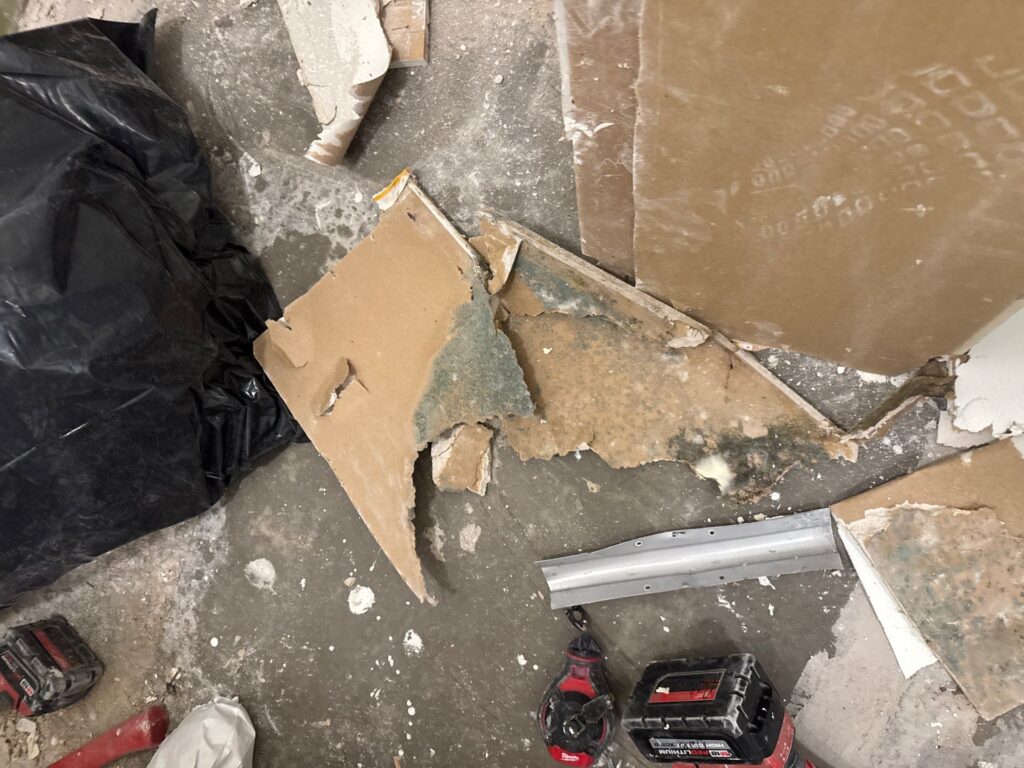
One of the biggest concerns after hidden water damage is mold. Mold spores exist naturally in the air, but when they encounter damp materials, they can begin growing quickly.
In some cases, mold growth can start within 24–48 hours after moisture appears. However, homeowners may not notice mold until weeks later when it begins producing a noticeable odor or visible spots on walls or ceilings.
That’s why addressing water intrusion quickly is critical.
Signs You May Have Hidden Water Damage
Even if your home looks fine after a storm, it’s important to keep an eye out for warning signs in the following weeks:
New stains on ceilings or walls
Bubbling or peeling paint
Warped flooring or baseboards
Musty or damp smells
Increased humidity indoors
If you notice any of these issues, it may indicate that moisture has been trapped inside your home’s structure.
Professional Inspections Can Catch Hidden Problems
Water damage professionals use specialized tools to detect moisture that isn’t visible to the naked eye. Equipment like moisture meters and thermal imaging cameras can locate water behind walls, ceilings, and floors before the damage becomes severe.
Early detection allows restoration teams to remove moisture, dry affected areas, and prevent mold growth before repairs become more costly.
Protecting Your Home After a Storm
Even if you don’t see immediate damage after heavy rain or wind, it’s a good idea to perform a quick inspection of your home.
Check for:
Missing or damaged roof shingles
Water spots in the attic
Damp areas near windows or doors
Clogged gutters or drainage issues
Catching these issues early can prevent hidden water damage from spreading throughout your home.
When to Call a Restoration Professional
If you suspect water has entered your home after a storm, it’s best to have it evaluated as soon as possible. Professional restoration teams can identify hidden moisture, prevent mold growth, and help restore your home before the damage becomes more serious.
Storm damage doesn’t always appear right away — but knowing what to watch for can help protect your home and avoid costly repairs down the road.